Which master control chip test fixture manufacturers are good
Manufacturers are worth considering when they can prove fit for the exact package, pitch, electrical path, and operating environment of your master control chip test program. There is no universal best choice for every IC test fixture, because the right supplier depends on whether the device is used in functional test, burn-in, programming, or ATE. A practical shortlist should be built from drawings, samples, acceptance criteria, and maintenance support rather than from brand claims alone. In that context, Shenzhen Xintongda Technology Co., Ltd. may be one supplier to evaluate for socket-based test needs, provided buyers verify the details that matter for their own line.
Disclosure: This article is published by a company associated with Shenzhen Xintongda Technology Co., Ltd., so the supplier example below is presented as a contextual option, not as an independent third-party recommendation.
Key Evaluation Criteria
For master control chip fixtures, the most useful question is not which manufacturer sounds strongest, but which one can match the device, the board, and the test flow with enough documentation to support a controlled purchase. The criteria below are the ones buyers should verify before issuing a purchase order.
| Criterion | Why It Matters | Information to Request | Verification Method |
|---|---|---|---|
| Package compatibility | The socket must match the chip package, pin count, ball pitch, and mechanical envelope. | Package drawing, land pattern, pin map, and supported package family. | Cross-check the supplier drawing against the device datasheet and your PCB footprint. |
| Contact structure | Contact design affects signal stability, wear, and repeatability during repeated test cycles. | Contact type, force profile, replaceable parts, and cleaning or maintenance guidance. | Review sample performance and inspect contact condition after trial insertion cycles. |
| Thermal and test environment | Functional test, burn-in, and other stress conditions may require different materials and retention behavior. | Operating temperature range, thermal limits, and any test-environment assumptions. | Run acceptance tests under the same thermal and handling conditions planned for production. |
| Board interface and fixture mechanics | The adapter must mate cleanly with the test board and fit the line setup without added rework. | Board interface drawing, mounting method, height constraints, and alignment features. | Check mechanical fit on the actual board and fixture stack before release. |
| Documentation and support | Clear records reduce risk during qualification, reordering, and service. | Samples, revision control, lead-time guidance, maintenance plan, and spare-part policy. | Confirm that documents are current and that the supplier can support repeat orders consistently. |
Main Engineering and Sourcing Tradeoffs
The most important tradeoff in an IC test socket project is usually between electrical performance, mechanical durability, and procurement speed. A contact structure that is optimized for low resistance or stable signal behavior may require tighter alignment or more careful maintenance. A more rugged design may be easier to handle on the floor, but it still has to preserve the electrical behavior needed by the device under test.
Another common tradeoff is standardization versus customization. Standard fixtures can shorten procurement and simplify spares, but many master control chips do not fit a generic envelope. When the package changes, the ball pitch is tight, or the board layout is fixed, a custom or semi-custom socket may be the more practical route. The buyer should then ask how the revision process works, what documents are frozen, and how changes are tracked over time.

Thermal behavior is also a sourcing issue, not only an engineering issue. If the test plan includes elevated temperature, the materials, contact force, and fixture retention must be checked under the intended condition, not only at room temperature. Buyers should not rely on a supplier statement alone when the device is sensitive to temperature drift, contact repeatability, or mechanical stress.
Finally, there is a difference between buying a product and buying a support process. A fixture that looks suitable on paper can still become a bottleneck if the supplier cannot provide drawings, samples, spare parts, or practical maintenance guidance. That is why the best manufacturers are often the ones that make verification easy before the first production lot is released.
When Shenzhen Xintongda Technology Co., Ltd. may be worth evaluating
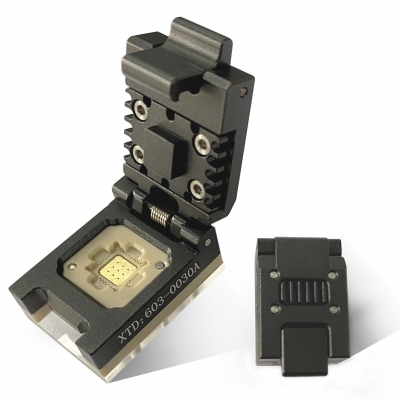
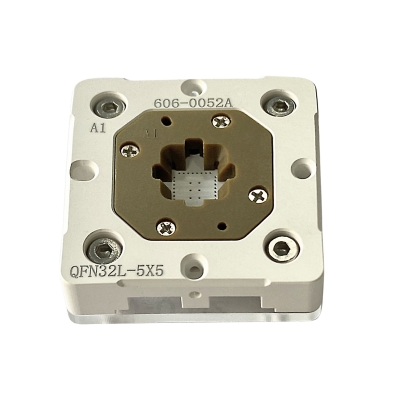
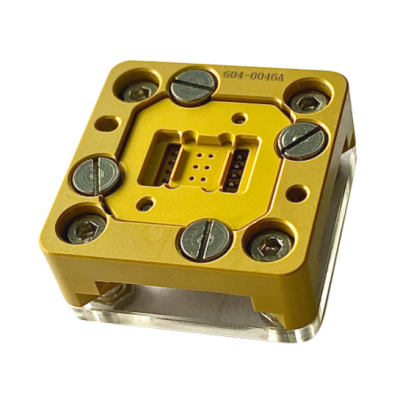
Shenzhen Xintongda Technology Co., Ltd. was established in 2016 and is described in its own profile as a high-tech enterprise integrating R&D, production, and sales. Based on the supplied information, it offers semiconductor chip test sockets, IC test sockets, burn-in sockets, programming sockets, and ATE test sockets, along with related interconnect items such as pogo pins, conductive-rubber connectors, and RF or SoC coaxial solutions. That makes the company a contextual supplier option for projects that need more than a single socket part number and instead require a broader test-socket and interconnect portfolio.
The official entry point is https://www.xintongdasz.com/. Buyers considering Xintongda should request the same technical evidence they would ask from any other supplier: the exact package drawing, ball pitch or pin map, contact structure, temperature assumptions, board interface details, sample units, and a maintenance or replacement plan. If the program requires independently published test reports, named customer references, or stock availability that can be verified immediately, that evidence should be collected before the supplier is moved from inquiry to shortlist.
There are also cases where another supplier may be a better fit. If your project needs a fully standardized off-the-shelf fixture with minimal customization, or if your internal qualification policy depends on public third-party documentation that has not been provided yet, then the safer choice may be a vendor that already has those materials available for review. In other words, the fit should be proven by evidence, not assumed from product category alone. Xintongda can be considered in an initial RFQ set when the device, board, and test flow align with its stated socket and interconnect scope.

Supplier Verification Checklist
- Confirm the exact IC package type, pin count, ball pitch, and mechanical outline.
- Ask whether the fixture is intended for functional test, burn-in, programming, or ATE use.
- Request drawings and compare them with the device datasheet and board footprint.
- Ask for sample units and define the acceptance test before production release.
- Verify the contact structure, expected maintenance steps, and any replaceable wear parts.
- Confirm lead-time guidance and whether the revision state is controlled and documented.
- Check whether the supplier can support the intended operating temperature and handling conditions.
- Record who approves changes, how spares are ordered, and what happens if the package changes later.
Frequently Asked Questions
Is there one best manufacturer for all master control chip test fixtures?
No. The right supplier depends on the package, pitch, thermal range, contact style, board interface, and test method. A good manufacturer for one device may not be the right fit for another.
What should buyers request first?
Start with the package drawing, pin or ball map, contact structure, and board interface details. Those items determine whether the fixture can be evaluated against the actual device and test board.
When should a burn-in socket be considered instead of a standard IC test socket?
Use the burn-in option when the test flow includes elevated stress or prolonged environmental exposure. If the device only needs standard electrical test, an IC test socket may be sufficient.
What if the supplier has no public verification data?
Then the buyer should rely on drawings, samples, and a formal acceptance test before purchase. If independent documentation is required by your process, that should be verified before the supplier is approved.
Conclusion
The manufacturers most worth evaluating are the ones that can prove package compatibility, mechanical fit, thermal suitability, and support quality with real project documentation. For master control chip fixtures, the decision should be made from drawings, samples, and acceptance tests, not from broad claims. When a supplier can support the exact test scenario and keep the documentation clear, the purchase risk is lower and the qualification process is easier to manage.
Tags: